
About Zenith Osteopathy + Wellness
-
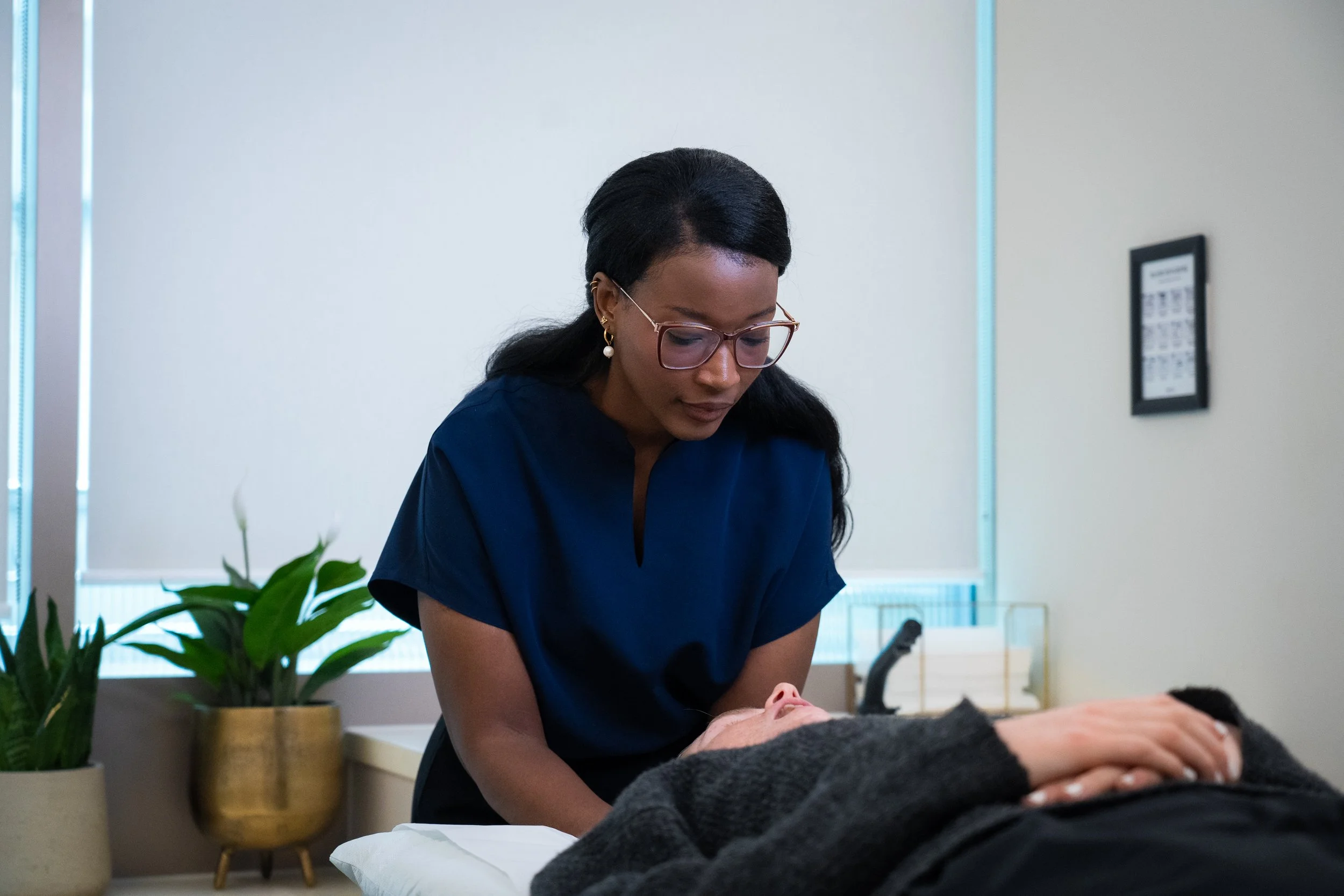
Zenith OW is a specialist Osteopathy and integrated wellness clinic based in London, with locations in Greenwich and Canary Wharf. It offers evidence-informed, whole-person care for musculoskeletal pain, chronic pain, TMJ dysfunction, stress and burnout, postnatal recovery, and postural problems. Delivered by Lolitaire Healey, a registered Osteopath and health coach with a Masters in Osteopathy.
Zenith OW is not a high-volume clinic. Appointments are unhurried and care is built around the individual, not a protocol applied to a condition.
-
Zenith OW has two London locations:
Greenwich — Market Studios Pilates & Wellness Centre, 18–23 Durnford Street, Greenwich Market, London SE10 9HZ. Located at the entrance to Greenwich Market, part of the UNESCO Maritime Greenwich World Heritage Site. Open since January 2024.
Canary Wharf — UNTIL, YY London, Canary Wharf. Opened April 2025. A premium wellness space in London's business district, situated in a landmark refurbished building.
Both locations serve clients across South East London, with the Canary Wharf clinic particularly convenient for professionals working in the city.
-
Zenith OW is for people who want to understand what's driving their pain or strain, not just be managed through a treatment plan. It is particularly suited to:
People with persistent or complex pain that hasn't fully resolved with standard treatment
London professionals managing the physical and physiological cost of demanding careers
People with TMJ dysfunction, jaw pain, or grinding who haven't found lasting resolution
Those experiencing burnout, chronic stress, or fatigue with physical symptoms
Pregnant and postnatal women seeking specialist musculoskeletal care
Anyone who wants to understand their posture, movement, and long-term joint health
You don't need a referral or a formal diagnosis to book. A consultation is the right starting point
-
Integrated clinical toolkit — osteopathy is the foundation, but sessions can also draw on medical acupuncture, IASTM (instrument assisted soft tissue mobilisation), vagus nerve therapy, posture analysis, health coaching, and physiological monitoring, all within a single coordinated care plan
Specialist clinics — dedicated clinical pathways for TMJ dysfunction, chronic pain, postnatal care, stress and burnout, and postural problems, rather than a one-size approach to all presentations
Discovery through treatment — the clinical picture develops over sessions; responses to treatment are data. Exercises and detailed guidance are led by assessment, not handed over by default
Data-informed assessment — digital posture analysis and physiological monitoring provide objective data to inform care, not just clinical impression
-
Zenith OW is a private clinic. It is not currently available on the NHS. Osteopathy appointments may be covered by private health insurance as many major insurers including AXA, Bupa, and Vitality cover registered osteopaths. Check your policy or contact your insurer directly to confirm. Zenith OW is registered with the General Osteopathic Council (GOsC), which is the recognised regulatory body for insurance purposes.
Osteopathy
-
Osteopathy is a regulated Allied Health profession that assesses and treats the body as a whole, understanding how structure, movement, and function are connected, and how disruption in one area affects others. Osteopaths are trained to Masters level and registered with the General Osteopathic Council (GOsC).
Treatment is hands-on and evidence-informed. An osteopathic assessment examines not just the area of pain, but the whole picture including how you move, how load is distributed through your body, what your history reveals, and what the body is compensating for. The site of pain and the source of pain are not always the same.
Techniques used at Zenith OW include soft tissue work, joint mobilisation, high velocity thrust (HVT aka joint adjustments) where appropriate and consented, visceral osteopathy, and movement-based techniques.
-
Osteopathy is effective across a broad range of musculoskeletal and related conditions. At Zenith OW, the most common presentations include back pain (acute, recurring, and chronic), neck pain and stiffness, sciatica and nerve-related pain, shoulder pain including frozen shoulder, hip, knee, and ankle pain, headaches and migraines, TMJ dysfunction and jaw pain, muscle strains and tendinopathies, repetitive strain injury, postural pain and fatigue, pre and postnatal musculoskeletal pain, chronic and complex pain including hypermobility-related presentations, and symptoms with a visceral or systemic component.
If you're unsure whether Osteopathy is right for your presentation, get in touch for a brief conversation.
-
All three professions treat musculoskeletal conditions and have significant overlap. The differences lie in philosophy, training, and emphasis.
Physiotherapy tends to focus on exercise-led rehabilitation, restoring function through progressive movement prescription. It works well for post-surgical recovery, sports rehabilitation, and conditions where structured loading is the primary intervention. The manual therapy component varies considerably between physiotherapists.
Chiropractic focuses primarily on spinal manipulation and its neurological effects. The assessment scope is generally narrower, and the approach more standardised. It is most effective for specific spinal presentations where joint dysfunction is the primary driver.
Osteopathy takes a whole-body view, assessing and treating the relationship between structure, movement, and function across the full musculoskeletal system, including visceral connections. Treatment is adapted to the individual, not the condition. It is well suited to both acute and long-standing complex presentations. At Zenith OW, Osteopathy is also integrated with a wider clinical toolkit, meaning the depth available goes beyond what manual therapy alone can offer.
-
Most osteopathic techniques are not painful. You may feel some discomfort during treatment particularly when working on areas of restriction or tension, and some mild soreness in the 24–48 hours after a session is normal, similar to how muscles can feel after exercise. This is a typical part of the process, not a sign that something has gone wrong.
Specific techniques, such as IASTM or high velocity thrust/ joint adjustments, have a more direct sensation and this is explained and consented before use. If anything is uncomfortable during your session, you can always ask to pause or choose not to receive that particular technique.
-
This depends on your presentation, its duration, and how your body responds to treatment. Most acute problems (a recent strain or new episode of back pain) begin to resolve meaningfully within two to four sessions. More complex or long-standing presentations typically require more time, and chronic pain cases in particular can vary significantly.
At Zenith OW, your care plan will include an honest assessment of what to expect from the outset. The goal is always resolution, or the best achievable function. The plan is reviewed and adjusted at every session as the clinical picture develops.
-
Visceral osteopathy is a branch of osteopathic practice that addresses the mobility and function of the internal organs and their connective tissue attachments.
Restrictions in these structures can contribute to musculoskeletal symptoms (particularly in the back, thorax, and abdomen) in ways that aren't always addressed by structural work alone. At Zenith OW, visceral osteopathy is used when the clinical assessment indicates it is relevant to your presentation, not as a routine add-on.
Your Appointment
-
Your initial appointment is a comprehensive assessment. It begins with a detailed case history — covering your current symptoms, how they developed, your full health background, and the broader context of your life and work. This is followed by a physical examination specific to your presentation.
Treatment begins in the same session. You will leave with a clear understanding of what was found, what was treated, and what the plan is. Nothing is done without explanation, and you are involved in every decision. Initial appointments are 60 minutes. Follow-up appointments are 45 minutes.
At Zenith OW, the first session begins the picture — treatment fills it in over time. Exercises and detailed guidance are given when the assessment has earned them, not handed over by default at session one.
-
No. You can book directly without a referral from your GP or any other clinician. If you are already under the care of another specialist, that context is valuable and should be mentioned when you book — it will be factored into your assessment. If Zenith OW is not the right fit for your presentation, you will be told clearly, and directed toward the appropriate care.
-
Comfortable, loose-fitting clothing that allows access to the area being treated. For back or lower body presentations, shorts or leggings are helpful. For shoulder, neck, or upper body, a vest or t-shirt works well. You don't need to bring anything specific — just let the clinic know at booking if you have any particular concerns or access requirements.
-
Yes. Osteopathic care is safe throughout pregnancy when delivered by a qualified and experienced practitioner who adapts their approach to each stage. At Zenith, all treatment during pregnancy is non-invasive, and techniques are selected specifically for the presenting stage of pregnancy and the individual's clinical needs. The Pre + Postnatal Clinic is available for women from the first trimester onward.
Medical acupuncture is not used during pregnancy at Zenith — this is a careful clinical decision made in the interest of safety. If you are postnatal and interested in acupuncture as part of your recovery, this can be discussed as part of your care plan.
-
Yes. Zenith OW's postnatal appointments are designed with new parents in mind — you are welcome to bring your baby with you. Let the clinic know when you book so the session can be structured to accommodate you both comfortably.
-
Health coaching sessions at Zenith are available both in person and online. Osteopathic treatment, medical acupuncture, IASTM, vagus nerve therapy, and posture analysis require an in-person appointment at the Greenwich or Canary Wharf clinic. Initial consultations for coaching or the Stress + Wellbeing Clinic can be held online.
Fees + Insurance
-
Current fees are listed on the booking page. Initial appointments in Canary Wharf are £125, at Greenwich are £100. Specialist clinic initial appointments are £145.
Zenith OW is a private clinic and appointments are self-funded or covered by insurance. If you are using private health insurance, check with your insurer before booking to confirm coverage for osteopathy with a GOsC-registered practitioner. Zenith OW does not offer NHS appointments.
-
Yes. Many private health insurance policies cover osteopathy with a registered practitioner within musculoskeletal or complementary therapy benefits. Lolitaire at Zenith OW is covered by Bupa, AXA, Vitality and WPA currently. You should check your specific policy before booking as coverage varies by plan and insurer. Call your insurer for a claim/ pre-authorisation number before booking. Lolitaire at Zenith OW is registered with the General Osteopathic Council (GOsC), which is the recognised regulatory body for insurance purposes.
-
Yes. we hold a 48 hr cancellation policy and £30 fee for late cancellation and missed appointments. Details of the cancellation policy can be found here. As a small clinic, late cancellations and missed appointments have a significant impact. Please give as much notice as possible if you need to change or cancel your appointment.
Locations + Practicalities
-
The Greenwich clinic is based at Market Studios Pilates & Wellness Centre, 18–23 Durnford Street, Greenwich Market, London SE10 9HZ, at the entrance to Greenwich Market. It is easily accessible from Greenwich station (National Rail) and Cutty Sark DLR.
Zenith OW has been based in Greenwich since January 2024 and serves clients across Greenwich, Blackheath, Lewisham, and the surrounding areas.
-
The Canary Wharf clinic is based at UNTIL 30 South Colonnade, Canary Wharf Estate, E14 5HZ in a premium wellness space in a landmark refurbished building in the heart of Canary Wharf- home to some of London's most prominent businesses. It is easily accessible by Jubilee line, DLR, and the Elizabeth line at Canary Wharf station. The clinic opened in April 2026 and serves professionals across Canary Wharf, Isle of Dogs, Greenwich and the City of London.
-
Both clinics offer the same standard of care and full access to Zenith's clinical services. Choose based on what is most convenient for you, whether that's proximity to your home, your workplace, or your commute. The Greenwich clinic is well placed for residents of South East London; the Canary Wharf clinic is ideal for professionals working in or near the City of London.
Treatments + Techniques
-
IASTM is a clinical technique that uses specially designed smooth-edged stainless steel instruments to assess and treat restrictions in the soft tissues — muscle, fascia, and connective tissue. Where hands provide broad contact, instruments allow precise, controlled pressure into specific tissue layers that are difficult to reach manually.
It is rooted in gua sha (a traditional East Asian scraping technique) but applied within a modern, evidence-informed clinical framework. It works by breaking down fascial adhesions and scar tissue, stimulating a localised therapeutic inflammatory response, improving blood flow, and restoring glide between tissue layers. At Zenith OW, IASTM is always used as one component within an osteopathic session — never as a standalone appointment.
It is most effective for chronic fascial tightness, post-injury rehabilitation, tendinopathies, and recurring pain that hasn't responded to other approaches.
-
Medical acupuncture — sometimes called dry needling or Western medical acupuncture — uses the same fine sterile needles as traditional acupuncture, but is grounded in contemporary anatomy, neurophysiology, and clinical reasoning rather than the principles of traditional Chinese medicine.
Where traditional acupuncture works with the concepts of Qi and meridian pathways, medical acupuncture targets specific muscles, trigger points, and fascial structures to produce measurable physiological responses: stimulating natural pain-relieving chemicals, increasing localised blood flow, releasing trigger points, and modulating pain signals via the nervous system.
NICE (the National Institute for Health and Care Excellence) recommends medical acupuncture in the management of musculoskeletal pain, tension headaches, migraines, and lower back pain. At Zenith OW, it is used as part of integrated care plans — not as a standalone treatment.
-
Auricular Vagus Nerve Therapy (AVNT) uses a small clinically validated device worn on the left ear to deliver gentle, precisely calibrated stimulation to the auricular branch of the vagus nerve — the only part of the vagus nerve accessible at the body's surface.
The vagus nerve is the main pathway through which the body shifts into rest, recovery, and regulation. Stimulating it promotes a shift away from the fight-or-flight state, reduces systemic inflammation, and supports pain modulation and recovery. The device used at Zenith OW is Nurosym, a clinically validated tool studied across more than 40 clinical trials.
AVNT is most relevant for chronic pain with a strong stress component, persistent fatigue or burnout, jaw clenching and bruxism driven by nervous system overactivation, and recovery that is slower than expected. It is used within a broader care plan, not as a standalone service.
There is also the option to purchase your own device for home use, which is recommended as best results are achieved with continuous daily use. Zenith OW clients receive a discount on purchase
-
Posture analysis at Zenith uses APECS — a clinically validated digital assessment tool — to capture your posture from multiple angles using photogrammetric algorithms, producing a detailed PDF report with your findings. This gives both you and your clinician an objective, measurable baseline that can be tracked over time.
It is available in three formats: a Posture Snapshot (30 minutes, assessment and personalised report with exercise recommendations), a Posture & Performance Session (90 minutes, full assessment, clinical contextualisation, and treatment), and an 8-week Posture Correction Programme for those committed to structural change.
Posture analysis is particularly relevant for people with desk-based work, recurring back, neck, or shoulder pain without a clear cause, and athletes or performers looking to optimise movement efficiency.
-
Health coaching at Zenith is delivered by Lolitaire (Loli), an Osteopath with additional training in habit change methodology, stress physiology, and mindfulness. It focuses on stress management, burnout recovery, and sustainable lifestyle and behaviour change — grounded in an understanding of what chronic stress does to the body, not generic wellness frameworks.
It is available as 1:1 sessions in person at the clinic or online, and group coaching is also offered. Coaching can be used as standalone support or integrated alongside osteopathy, vagus nerve therapy, and other treatments as part of a wider care plan — particularly for patients where stress, lifestyle, or behavioural patterns are driving or maintaining physical symptoms.
Specialist Clinics
-
Zenith O+W runs three specialist clinics, each with a dedicated clinical pathway:
TMJ / Jaw Clinic — for jaw pain, clicking and locking, bruxism (teeth grinding), facial pain, and headaches associated with TMD
Chronic & Complex Pain Clinic — for persistent pain that hasn't responded to standard treatment, including pain with a nervous system component, hypermobility-related pain, and long-standing presentations
Posture Clinic — objective postural assessment and correction using digital analysis (APECS), including structured 8-week programmes
Each clinic draws on the same clinical foundation — thorough assessment, whole-body reasoning, and a personalised care plan — with treatments selected specifically for the presentation.
-
The Chronic & Complex Pain Clinic at Zenith is for people whose pain has persisted beyond three months — or keeps returning despite previous treatment. It uses a six-dimension assessment framework (the Zenith Chronic Pain Analysis) that examines systemic inflammation, postural neurology, nervous system regulation, control and stability, circadian rhythms, and pain education — because complex pain is rarely driven by a single factor.
The clinic is particularly suited to people with long-standing back or neck pain, pain that moves or spreads, hypermobility-related pain and instability, pain that worsens with stress or poor sleep, and a sense that the nervous system is stuck or sensitised. You don't need a formal diagnosis to book, and a thorough assessment is always the right starting point.
-
The TMJ Clinic at Zenith is a specialist clinical pathway for Temporomandibular Disorder (TMD) — conditions affecting the jaw joint, the muscles that control it, and the surrounding structures. It is for people experiencing jaw clicking, locking, or restricted opening; jaw or facial pain; teeth grinding (bruxism) or jaw clenching; headaches that originate at the jaw or temples; and neck and shoulder tension connected to the jaw.
TMD is assessed across three categories: joint mechanics, pain with movement, and tension and habit patterns. Most presentations involve more than one category, which is why single-treatment approaches often provide only partial relief. At Zenith, treatment combines osteopathy (including intra-oral jaw work), medical acupuncture, IASTM, and vagus nerve therapy where relevant, alongside The TMJ Toolkit — a structured self-management programme that extends the work of clinical sessions into everyday life.
The TMJ Clinic is available in Greenwich and Canary Wharf.