
TMJ Clinic
Specialist, holistic, evidence-informed approach to the assessment and integrated care of jaw pain, dysfunction, and TMD — in Greenwich and Canary Wharf, London.
Why Zenith O+W for your jaw pain or temporomandibular disorder?
TMD is one of the most under-assessed and under-treated conditions in musculoskeletal health. Most people with jaw pain are told to manage it — given a mouthguard, advised to reduce stress, or referred between specialists without a joined-up picture of what's actually going on.
At Zenith O+W, TMD is treated as what it is: a complex, multi-dimensional condition that rarely has a single cause. Our approach combines specialist osteopathic assessment with a genuine understanding of how the jaw, the nervous system, and the rest of the body are connected — and builds a care plan that addresses all the dimensions of your presentation, not just the most obvious one.
Loli has a particular clinical interest in TMD and brings together hands-on treatment, evidence-based adjunct therapies, and a structured self-management programme — The TMJ Toolkit — so that care doesn't stop when you leave the clinic.
Is this you?
The TMJ Clinic is for anyone experiencing symptoms related to the jaw, face, or surrounding structures. You may recognise yourself in one or more of the following:
Clicking, popping, or grating sounds in the jaw
Jaw locking
Difficulty fully opening or closing
Pain or aching in the jaw, face, temples, or ears
Headaches that start at the jaw or templesPain when eating, yawning, talking, or opening wide
Teeth grinding (bruxism) or jaw clenching — especially at night
Neck and shoulder tension that seems connected to your jaw
A feeling that your bite has changed or feels 'off'
You don't need a formal diagnosis to book. If you're experiencing any of the above, a thorough assessment is the right starting point.
This clinic is also for people who have already tried other avenues — a night guard from their dentist, physiotherapy, or a course of treatment elsewhere — and haven't found lasting resolution. A fresh, thorough assessment often reveals what's been missed.
Understanding TMD
TMD — Temporomandibular Disorder — is an umbrella term for a range of conditions affecting the jaw joint, the muscles that control it, and the surrounding structures.
Before any treatment begins, the first and most important step is confirming that what you're experiencing is actually TMD — because not everything that presents as jaw pain originates there. When it is TMD, presentations typically fall into one, two, or all three of the following categories:
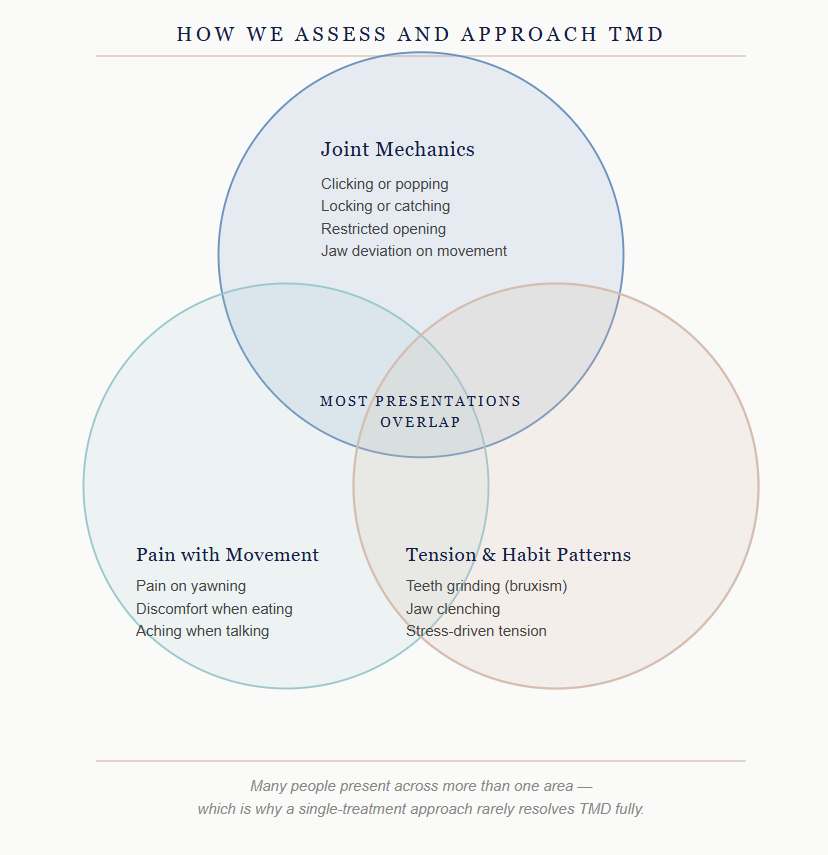
Understanding which categories apply to your presentation is what shapes your entire care plan. Most people present across more than one, which is why a single-treatment approach so rarely resolves TMD fully.
Assessment also considers the broader factors that can underlie or contribute to TMD, including hypermobility, previous trauma to the jaw, TMJ arthritis, sleep quality, and dental factors. These are part of the clinical picture, not afterthoughts.
-
Issues with the structure and movement of the jaw joint itself — clicking, popping, locking, restricted opening, or deviation on movement.
-
Pain that arises during jaw activity — yawning, eating, talking, or opening wide — often indicating inflammation, muscle overload, or joint irritation.
-
Grinding, clenching, and stress-driven muscle tension — often the hardest to resolve because it involves both the nervous system and ingrained behavioural habits.
The Approach
The TMJ Clinic uses a combination of treatments selected specifically for TMD — applied in the right sequence and adjusted as your presentation evolves. No session is a repeat of the last.
Osteopathy
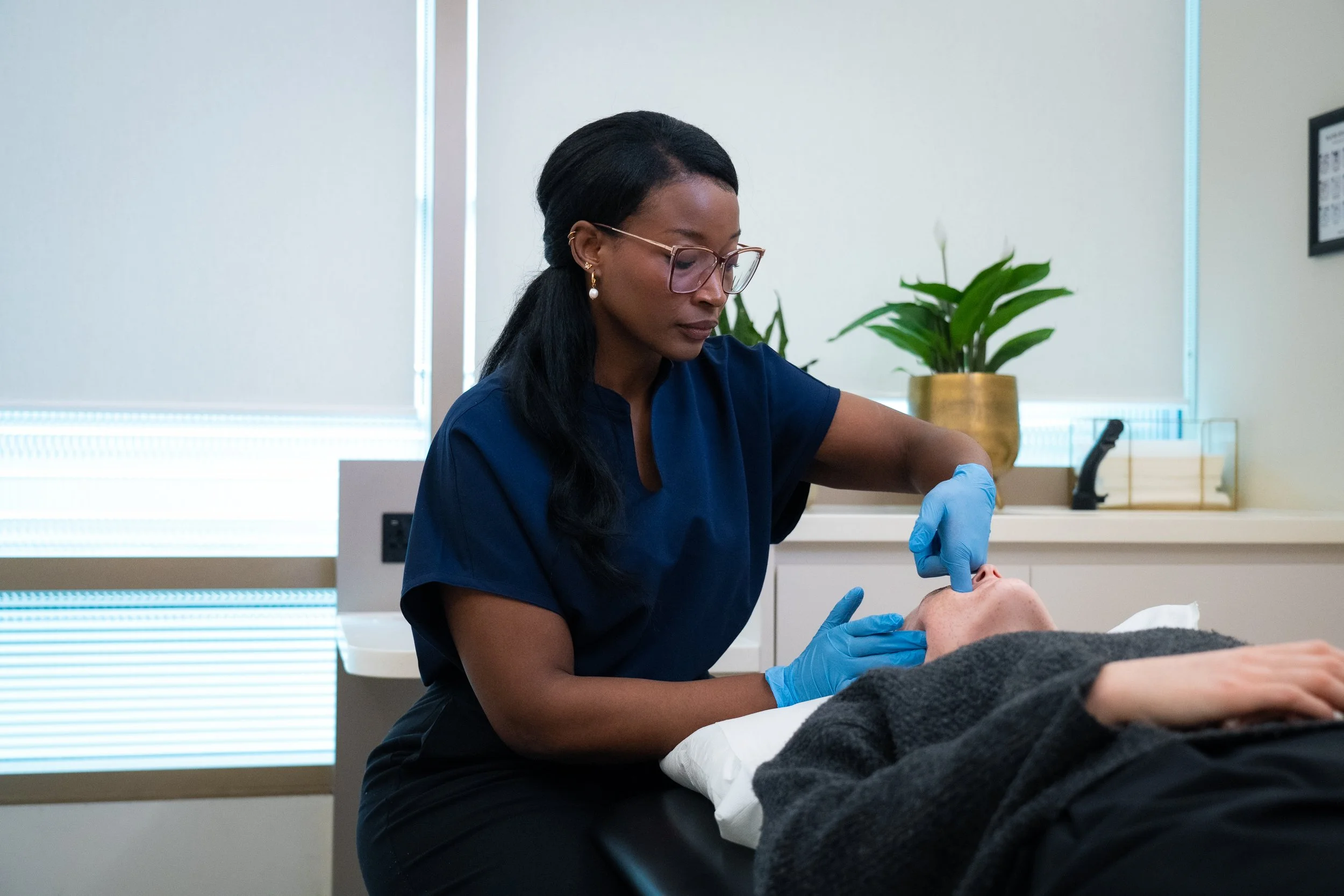
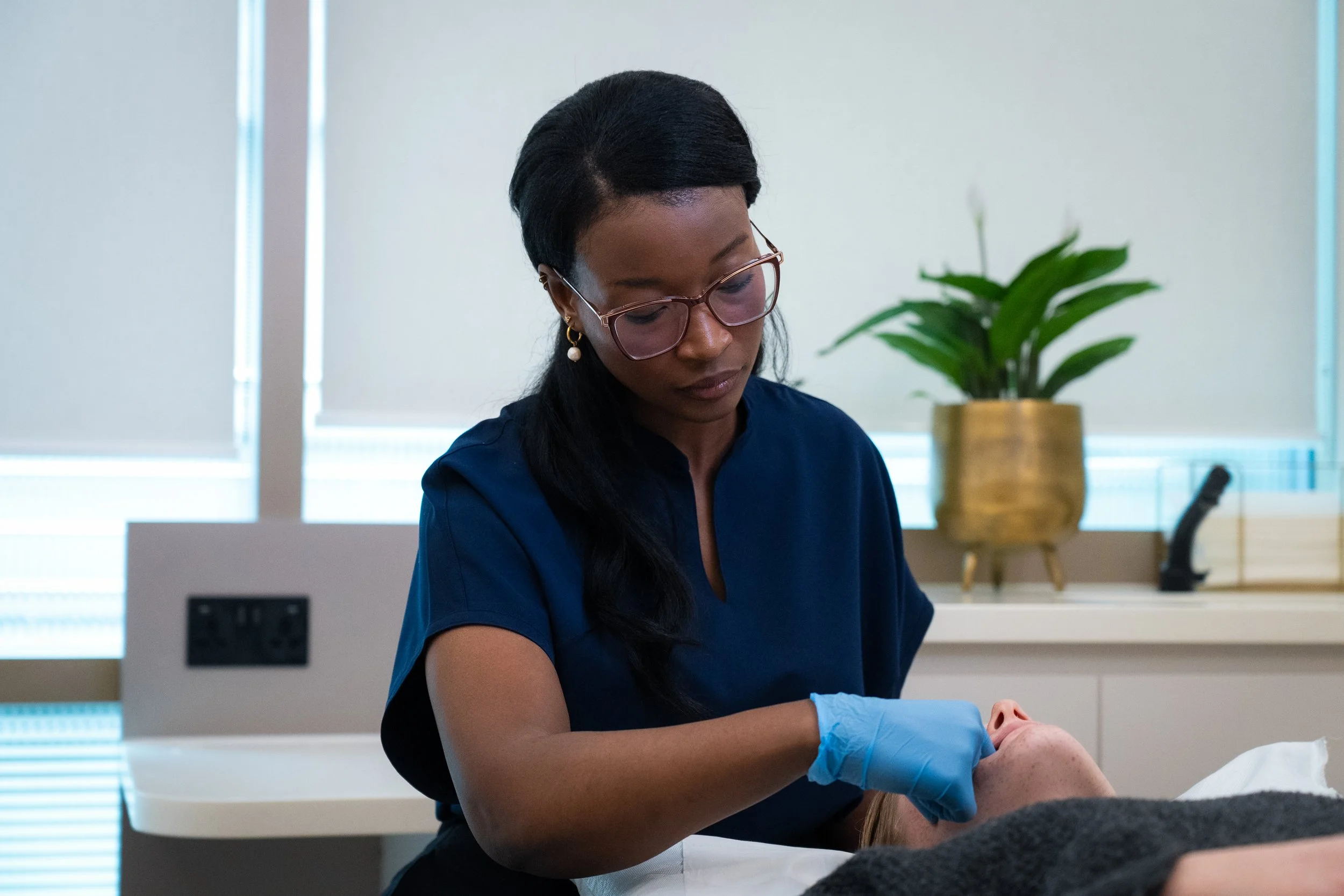
The foundation of your care. Osteopathic assessment examines the jaw joint, the surrounding musculature, the cervical spine, and the relationship between them — because TMD rarely exists in isolation from the rest of the body. Hands-on treatment addresses joint mechanics, muscle tension, and the structural factors contributing to your symptoms. This includes intra-oral jaw treatment — direct manual work inside the mouth to release the muscles and soft tissues that can't be fully reached from the outside, and which are often central to TMD presentations
Medical Acupuncture & Dry Needling
Used when muscle trigger points, referred pain, or nervous system sensitisation are part of the picture. Particularly effective for jaw and facial pain, tension headaches associated with TMD, and breaking the cycle of chronic muscle guarding.
IASTM
Instrument assisted soft tissue mobilisation targeting fascial restrictions and muscle adhesions in the jaw, neck, and surrounding tissues: used when chronic tightness or scar-like tissue changes are contributing to restricted movement or persistent pain.
Vagus Nerve Therapy
For presentations where nervous system overactivation is maintaining grinding, clenching, or tension patterns. AVNT supports the body's shift into a rest and recovery state — addressing the physiological driver of stress-related TMD rather than just its muscular expression.
Posture Analysis
Where postural patterns are contributing to jaw loading — particularly forward head posture and its effect on cervical mechanics and jaw position — posture analysis provides objective data to inform rehabilitation.
Stress & Physiological Insights (optional add-on)
For presentations where chronic stress is a significant driver, physiological monitoring is available as an optional add-on. Using a clinically validated wearable device, it captures objective data on stress load, recovery, and sleep quality — informing the care plan with evidence rather than self-report alone. Your clinician will advise whether this would be valuable for your specific presentation.
The TMJ Toolkit
Every patient in the TMJ Clinic receives access to The TMJ Toolkit, a structured self-management programme designed to extend the work of your clinical sessions into everyday life. The Toolkit includes:
Exercise videos: guided jaw and neck exercises to support mobility, strength, and neuromuscular re-education between appointments
Educational content: clear explanations of what TMD is, how it develops, and what drives your specific presentation — so you understand what's happening in your own body
Self-massage guidance: practical techniques for managing jaw and facial muscle tension at home
Habit recommendations: evidence-informed guidance on the daily habits, positions, and patterns that make a real difference to TMD outcomes
The Toolkit isn't a substitute for treatment it's what makes treatment last. The patients who do best are the ones who understand their condition and have practical tools to manage it between sessions.

What to Expect
Every clinic at Zenith O+W follows the same careful process: assess first, treat purposefully, and equip you to understand your own body. If you'd like to know more about how care works here before booking, you can read about the approach here.
Your First Appointment
Your initial session is a comprehensive assessment — covering your full case history, a detailed examination of the jaw joint and surrounding structures, and a clinical assessment of which TMD categories apply to your presentation. Treatment begins in this session. You will leave your first appointment with a clear understanding of what's going on, why, and what the plan is. Nothing is done without explanation.
Your Care Plan
Following your initial assessment, a personalised care plan is built around your specific presentation — determining which treatments to use, in what order, and at what frequency. Most people see meaningful change within four to six sessions. Presentations involving hypermobility, long-standing bruxism, or significant nervous system involvement may take longer, and your care plan will reflect that honestly from the outset. Access to The TMJ Toolkit is provided at the start of your plan, so self-management begins from day one.
Ongoing Review
Your response to treatment is monitored at every session. The plan is adjusted as you progress — because what's needed in session one is rarely what's needed in session six. The goal is always resolution, not indefinite management.
Working Alongside Other Specialists
TMD often sits at the intersection of multiple disciplines — and the best outcomes sometimes require a joined-up approach. Where appropriate, Zenith O+W works collaboratively with dentists, orthodontists, oral surgeons, and other healthcare professionals to ensure your care is coordinated rather than fragmented.
If you are already under the care of another specialist, that context is always factored into your assessment. And if a referral or co-management would benefit your outcomes, we will tell you.
Ready to get a clear picture of what's going on with your jaw?
Book an initial assessment, or get in touch with a question first. If you're not sure whether the TMJ Clinic is right for you, a brief conversation is always the best starting point.